
The 20 must-see places in New York
What are the must-see landmarks, monuments and museums in New York? Here's our list of the 20 essential places to visit in New York!
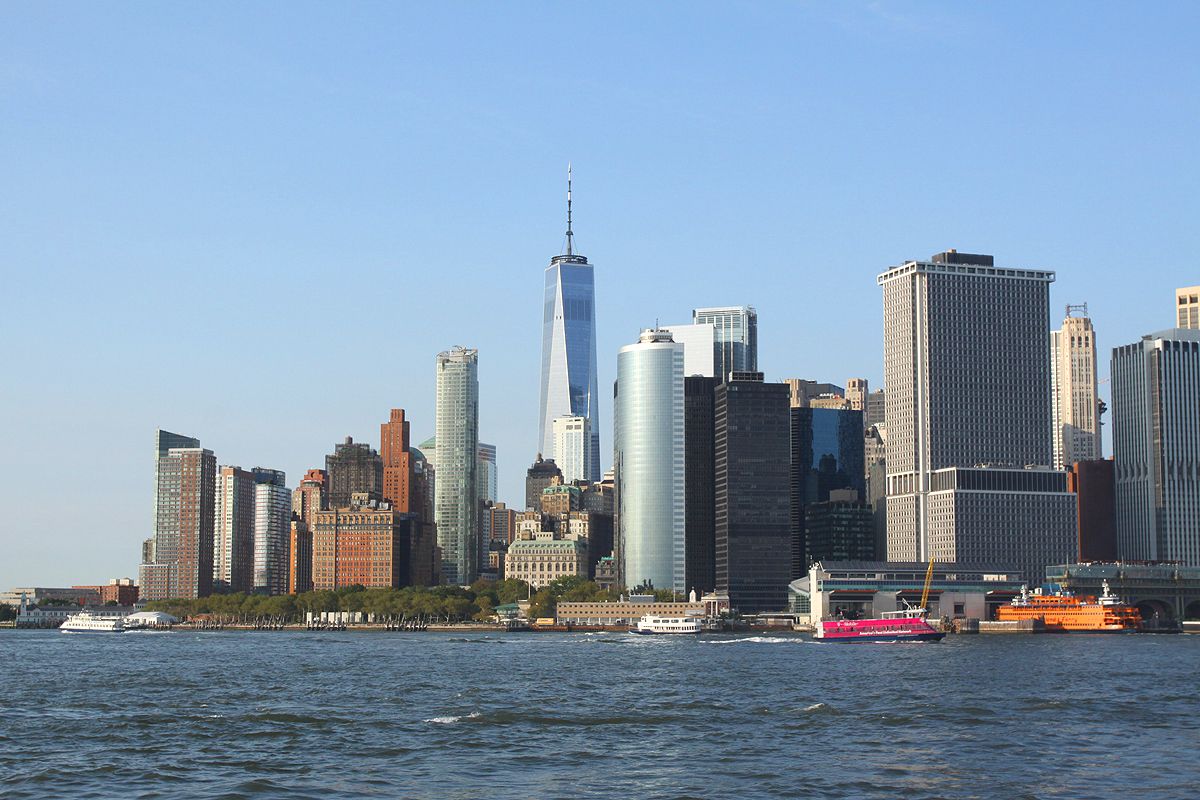
1/ The Statue of Liberty and Ellis Island
- Why is it essential? Standing on a small island in New York Harbor, the Statue of Liberty embodies America itself. For New York, it’s what the Eiffel Tower is to Paris: the landmark you must see. A visit to the Statue of Liberty naturally continues to Ellis Island, where immigrants arrived in the late 19th and early 20th centuries. Another crucial site in New York’s history.
- Tip: Schedule your visit to the Statue of Liberty and Ellis Island for the day after you arrive. This way, you can catch the first morning ferry and avoid the long lines that form by late morning.
- More information: Visit the dedicated pages for the Statue of Liberty and Ellis Island.

2/ The Brooklyn Bridge
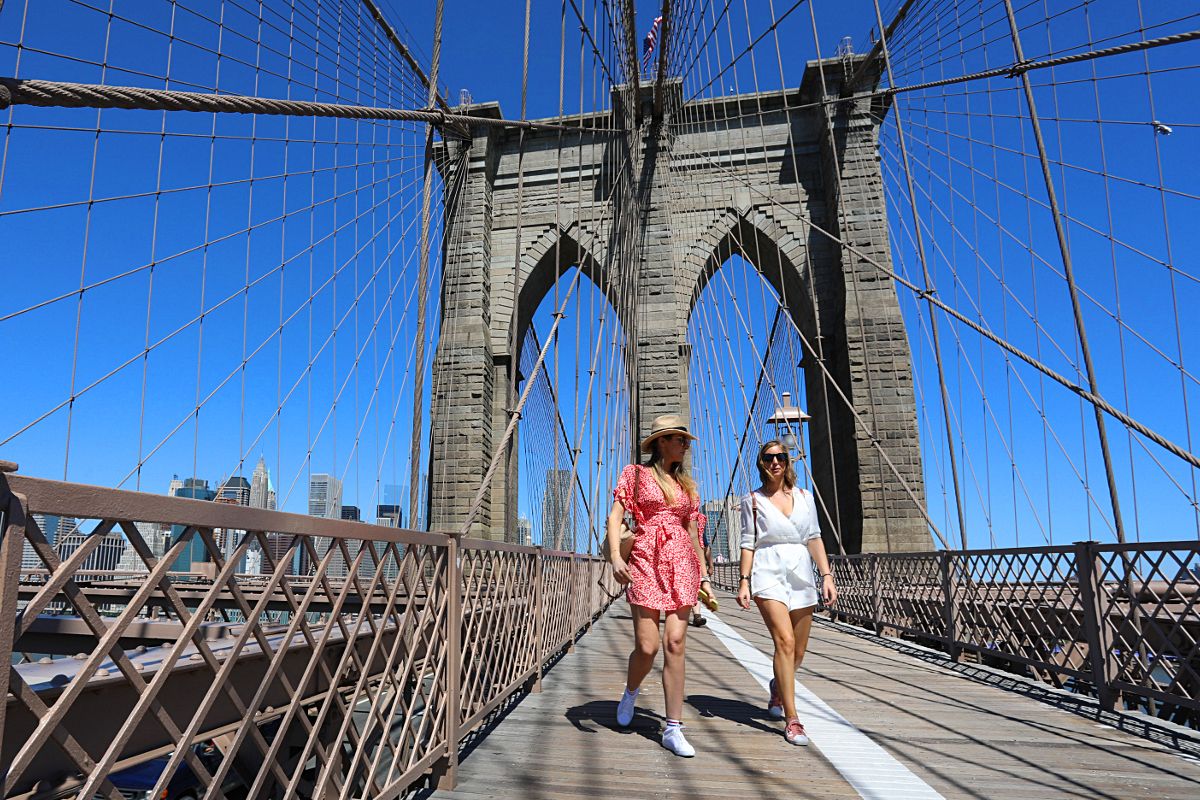
- Why is it essential? This bridge connecting Manhattan to Brooklyn features distinctive architecture. You’ve likely seen it in countless films set in New York. The best part: the Brooklyn Bridge has a pedestrian walkway with stunning views of the city.
- Tip: Cross from Brooklyn to Manhattan in the morning. You’ll have the sun at your back, perfectly lighting up Manhattan’s skyscrapers.
- More information: Visit the dedicated page for the Brooklyn Bridge.
3/ The World Trade Center and the Financial District
- Why is it essential? At the southern tip of Manhattan, the Financial District symbolizes American financial power. Head to Wall Street to see the iconic New York Stock Exchange. The district is dominated by One World Trade Center, the tallest building in North America. This tower replaced the original Twin Towers of the World Trade Center, destroyed in the September 11, 2001 attacks. The memory of 9/11 remains very present in New York. Take time to visit the memorial and the 9/11 Museum. Don’t miss the Oculus, the striking World Trade Center transportation hub.
- Tip: To explore the Financial District thoroughly, consider a guided tour. A 3-hour tour covers the neighborhood’s history from its origins to today.
- More information: Visit the dedicated page for the Financial District.

4/ The Empire State Building
- Why is it essential? Though shorter than One World Trade Center, the Empire State Building remains an iconic symbol of New York. Opened in 1931, this skyscraper has appeared in countless films, from The Day After Tomorrow to Independence Day. Beyond its Art Deco interior, you can enjoy sweeping views from the observation deck on the 86th floor.
- Tip: Before heading to the 86th-floor observatory, take time to appreciate the building’s interior, especially its magnificent lobby on Fifth Avenue. Many visitors rush through without looking.
- More information: Visit the dedicated page for the Empire State Building.

5/ The Flatiron Building
- Why is it essential? The Flatiron Building ranks among New York’s most striking structures. Its triangular shape and slender profile seem to defy physics. Just across the street, take a break in the charming Madison Square Park, where you’ll encounter New York’s friendly squirrels.
- Tip: Step inside the Flatiron Building—a small exhibition awaits. Read my article about the Flatiron Building’s interior.
- More information: Visit the dedicated page for the Flatiron Building.

6/ The Chrysler Building
- Why is it essential? Opened in 1930, the Chrysler Building is now dwarfed by surrounding structures. Yet at 319 m (1,046 ft) tall, it remains impressive. It’s my personal favorite in New York for its elegant architecture.
- Tip: Don’t hesitate to enter the Chrysler Building. A small exhibition awaits in the lobby, and you can admire the beautiful doors that frame the elevators.
- More information: Visit the dedicated page for the Chrysler Building.

7/ Grand Central Terminal
- Why is it essential? You might be surprised to find a train station on a must-see list for New York. But Grand Central Terminal is no ordinary station. Its decor is absolutely unique and deserves a visit.
- Tip: Visit Grand Central on a weekday evening when the station buzzes with commuters rushing to catch their trains. The energy is electric.
- More information: Visit the dedicated page for Grand Central Terminal.

8/ The United Nations Headquarters
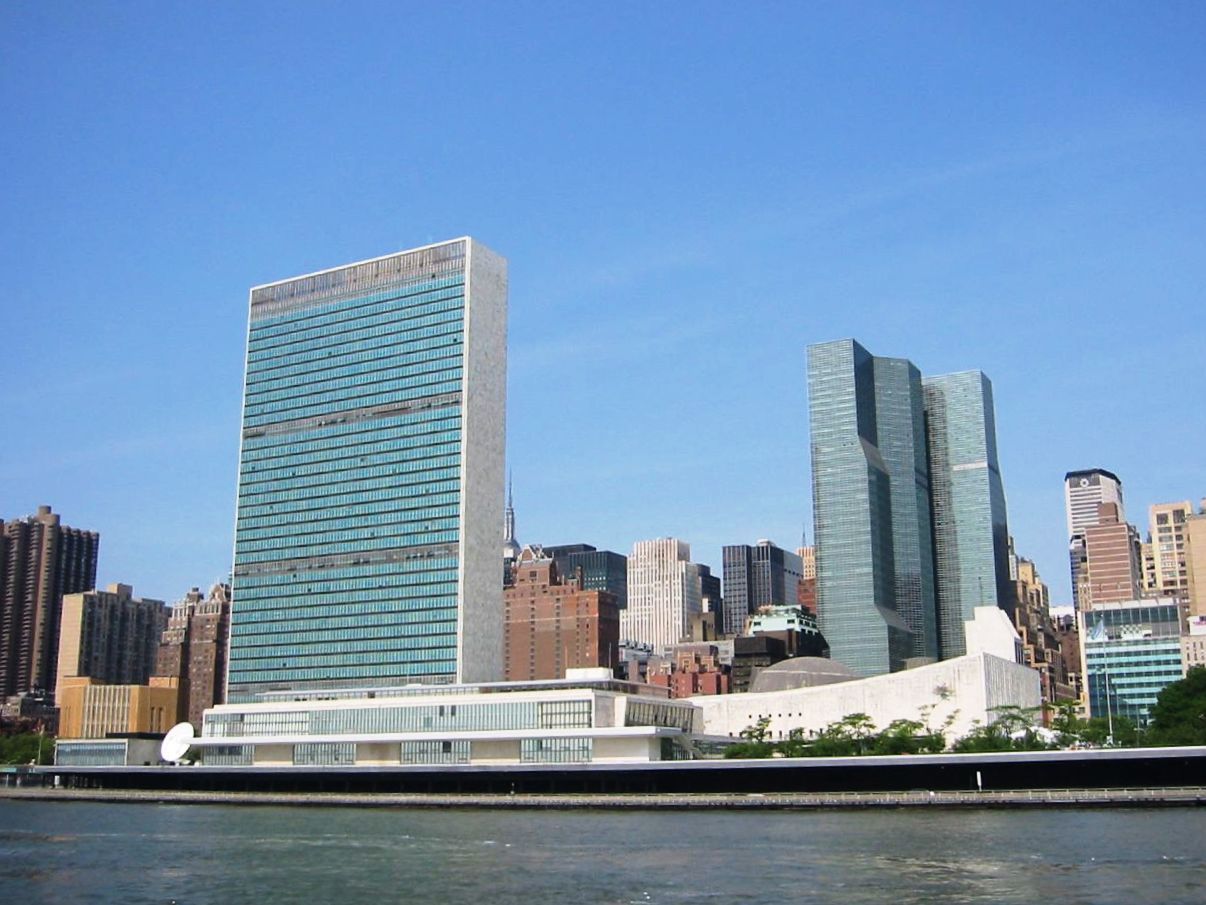
- Why is it essential? The UN headquarters immerses you in contemporary history and current events. Book a guided tour in advance by following my tips on the page explaining how to visit the UN. The tour includes the famous Security Council chamber and the General Assembly hall.
- Tip: After visiting the UN, head up 42nd Street. You’ll see or revisit the Chrysler Building, Grand Central Terminal, and Bryant Park.
- More information: Visit the dedicated page for the UN Headquarters in New York.
9/ Bryant Park
- Why is it essential? If you’ve never been to New York, this name might mean nothing to you. Yet I stand by it: Bryant Park absolutely deserves its place on the must-see list. This small park on 42nd Street in the heart of Midtown lets you feel the pulse of New York. Grab a chair, settle on the lawn, and watch the Empire State Building rise above you. That’s when you’ll know you’ve truly arrived.
- Tip: Do as New Yorkers do and bring a picnic to Bryant Park.
- More information: Visit the dedicated page for Bryant Park.

10/ Rockefeller Center
- Why is it essential? Located in the heart of Midtown, Rockefeller Center is a real estate complex built in the 1930s. The buildings showcase beautiful Art Deco style, particularly the stunning lobby of the Comcast Building, the tallest in the complex. Nearby, don’t miss St. Patrick’s Cathedral and Radio City Music Hall. Rockefeller Center is also home to Top of the Rock, an observation deck. Lower than the Empire State Building’s observatory and One World Observatory at One World Trade Center, but what a view! It’s my favorite. If you don’t love it, I’ll refund your ticket!
- Tip: Head to Top of the Rock when it opens. You’ll skip the line and enjoy the best light, with the sun perfectly positioned to illuminate southern Manhattan.
- More information: Visit the dedicated pages for Rockefeller Center and Top of the Rock.

11/ Central Park
- Why is it essential? Central Park is Manhattan’s green lung, a vast park roughly 4 km (2.5 mi) long and 800 m (2,625 ft) wide. It offers a peaceful retreat in the heart of the city. The park holds many surprises, from the Alice in Wonderland statue to the Balto statue. Central Park is also perfect if you want to bike in New York, rollerblade in New York, or even row on Central Park Lake. Don’t leave New York without enjoying Central Park.
- Tip: Explore Central Park on weekends to enjoy the family-friendly atmosphere. The park is much livelier than on weekdays.
- More information: Visit the page about 10 things to see in Central Park.

12/ The Metropolitan Museum of Art
- Why is it essential? If you visit only one museum in New York, make it this one. The Metropolitan Museum of Art is the largest museum in New York—New York’s Louvre. Its collections span from ancient Egypt to today, including French Impressionists and American painting. If you love art, this is the place to be.
- Tip: Don’t forget to visit the Met’s rooftop. Learn how to reach the Metropolitan Museum rooftop.
- More information: Visit the dedicated page for the Metropolitan Museum of Art.

13/ Times Square
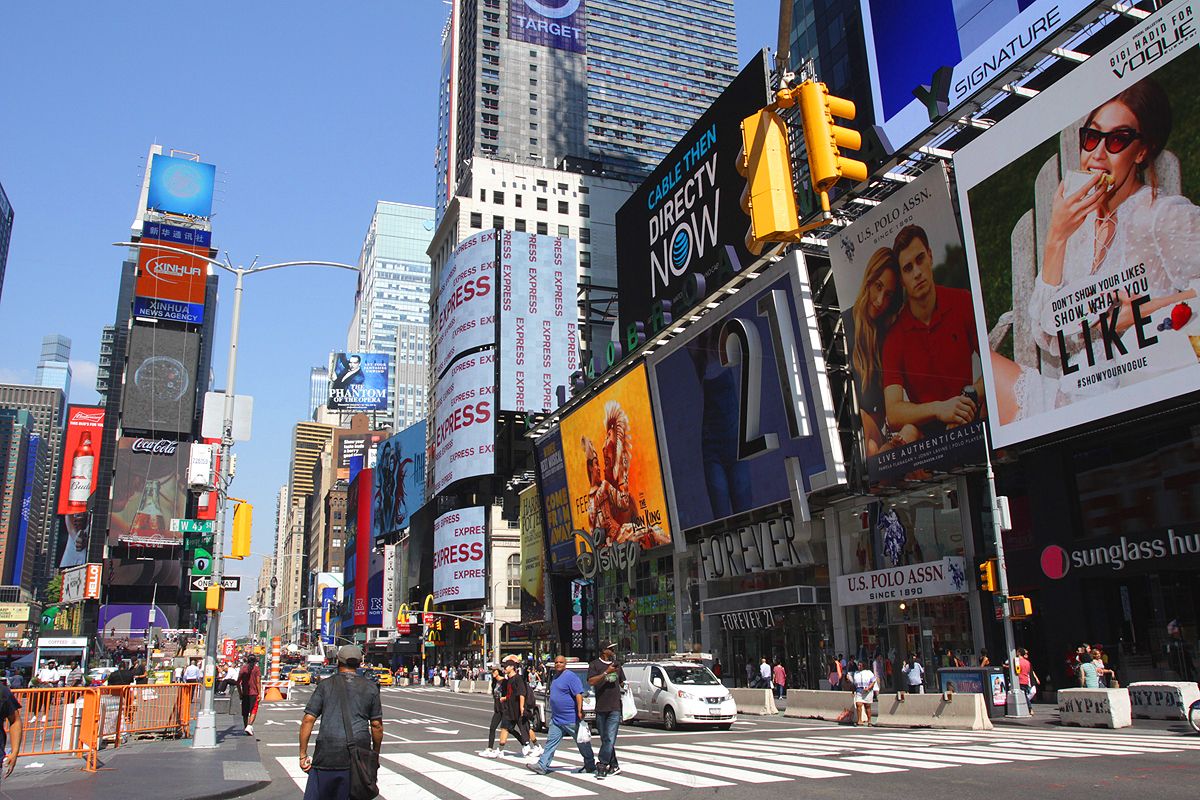
- Why is it essential? Times Square is the world’s busiest intersection. The neighborhood pulses 24/7, bathed in neon and advertising screens. Yes, it’s extremely touristy, but you must experience this unique madness.
- Tip: If you can manage it, visit Times Square the evening you arrive in New York. You’ll be overwhelmed by the spectacle, and it will help keep you awake.
- More information: Visit the dedicated page for Times Square.
14/ The Summit
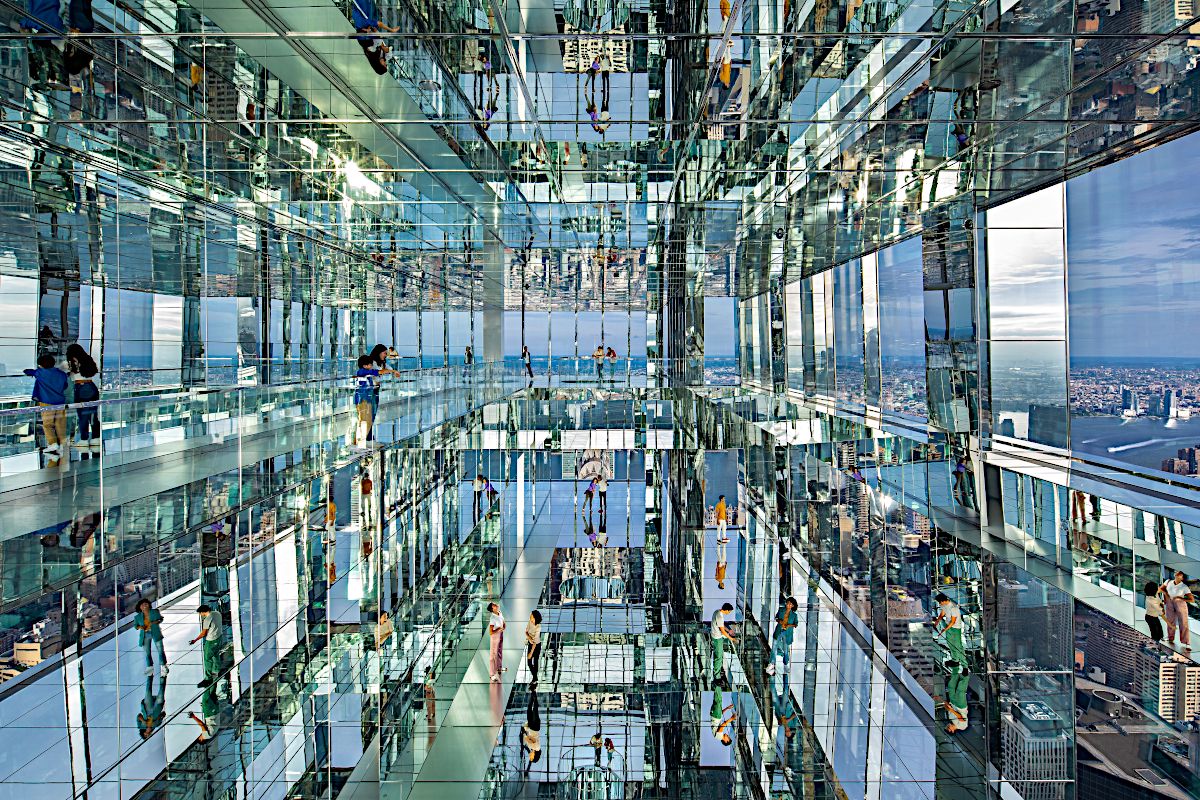
- Why is it essential? One Vanderbilt is a new giant tower, 427 m (1,401 ft) tall, opened in 2020 right next to Grand Central Terminal. The tower is open to the public: since September 2021, an observation deck awaits at the top. Expect stunning views of the Empire State Building, the Chrysler Building, and Manhattan.
- Tip: This new observation deck is in high demand from visitors worldwide. Book your tickets as early as possible through our The Summit observation deck ticket reservation system.
- More information: Visit the dedicated page for Summit One Vanderbilt.
15/ The High Line
- Why is it essential? The High Line is a promenade built on an elevated former railroad track. This New York version creates a remarkable route between the Meatpacking and Hudson Yards neighborhoods, passing through Chelsea, with unique views of southern Manhattan, the Empire State Building, and the Hudson River. In Hudson Yards, you’ll discover one of New York’s boldest creations: the Vessel, a structure that blurs the line between art and architecture. Learn more on the page dedicated to the Vessel.
- Tip: Pack a picnic for the High Line. You’ll find everything you need at Chelsea Market, a covered market at the southern entrance to the High Line.
- More information: Visit the dedicated page for the High Line.

16/ The Villages
- Why is it essential? New York isn’t just about skyscrapers. Greenwich Village and the East Village offer a completely different atmosphere and scenery. Yet you’re still in the heart of New York.
- Tip: To experience the villages fully, consider booking a guided tour. The 3-hour tour gives you a complete overview of both neighborhoods without wasting time. Visit the page for the Greenwich Village and East Village guided tour.
- More information: Visit the dedicated pages for Greenwich Village and the East Village.

17/ SoHo and TriBeCa
- Why is it essential? SoHo and TriBeCa are two neighborhoods north of the Financial District. SoHo is worth visiting for its many fashion boutiques. TriBeCa features beautiful cast-iron buildings with distinctive facades. Both neighborhoods have a unique vibe—chic yet peaceful.
- Tip: If you want to shop, go on a weekday morning. You’ll have a more relaxed experience and better access to staff than on Saturday.
- More information: Visit the page for our SoHo guided tour.

18/ Bushwick
- Why is it essential? Bushwick, a Brooklyn neighborhood, has gained fame in recent years for its stunning street art. Here, “street art” is the term used, and the murals are truly incredible works. It’s a must-see for experiencing New York beyond Manhattan.
- Tip: Book a guided tour to discover Bushwick’s best murals and not miss anything. The 3.5-hour tour covers Bushwick, Williamsburg, and DUMBO, two other Brooklyn neighborhoods. Visit the page for the Brooklyn guided tour.
- More information: Visit the dedicated page for Bushwick.

19/ Harlem
- Why is it essential? North of Central Park, the Harlem neighborhood tells the story of the African American community and jazz. Harlem is also famous worldwide for its Gospel services on Sunday. Discover another side of New York.
- Tip: To experience the best of Harlem, book a guided tour. The 2.5-hour tour provides a complete overview of the neighborhood. Visit the page for the Harlem guided tour.
- More information: Visit the page about murals to see in Harlem.

20/ Governors Island
- Why is it essential? When you visit New York, I strongly recommend stepping foot on Governors Island. This island in New York Harbor, facing the Statue of Liberty, offers stunning views of the city. It’s accessible year-round.
- Tip: Plan your visit for Friday or Saturday to enjoy the evening hours. You can watch the sunset. Read my article about evening visits to Governors Island.
- More information: Visit the dedicated page for Governors Island.

Want to explore even more of New York?
- New York certainly extends beyond these 20 locations. This list represents the essential foundation. From here, you can explore other landmarks, monuments, and museums based on your interests. To help you plan your New York trip and discover everything the city has to offer, consider our new travel guide Destination New York. This 248-page full-color guide covers everything you need to see and know about New York.
- Learn more on the Destination New York guide page.
