
Rockefeller Center: A City Within the City in New York
Rockefeller Center marks the heart of New York. Its 19 buildings house offices, shops, restaurants, and more—including the iconic Radio City Music Hall.

What You Need to Know About Rockefeller Center
- Rockefeller Center is a complex of buildings constructed in New York in 1929 under the direction of businessman and oil magnate John D. Rockefeller. The first 14 buildings were completed by 1940. It’s a city within a city, with offices, shops, restaurants, a theater, and even a post office.
- The complex features striking Art Deco architecture, with geometric lines and a strong emphasis on symmetry. Rockefeller Center is now designated as a historic landmark.
- The section of West 47th Street between Avenue of the Americas and Fifth Avenue earned the nickname “Diamond Row.” The street is home to an extraordinary concentration of diamond dealers and jewelry shops. Looking for a special souvenir?

What to See at Rockefeller Center
- At the base of the Comcast Building, Rockefeller Plaza forms the heart of the complex. In summer, it’s a popular pedestrian gathering spot. In winter, the plaza hosts an ice rink dominated by an enormous Christmas tree. Top of the Rock also features several iconic shops, including toy stores FAO Schwarz, Nintendo, and Lego.
- Near the corner of Fifth Avenue and 49th Street, you’ll find the statue of Atlas holding the world. This monumental sculpture was created by Lee Lawrie.
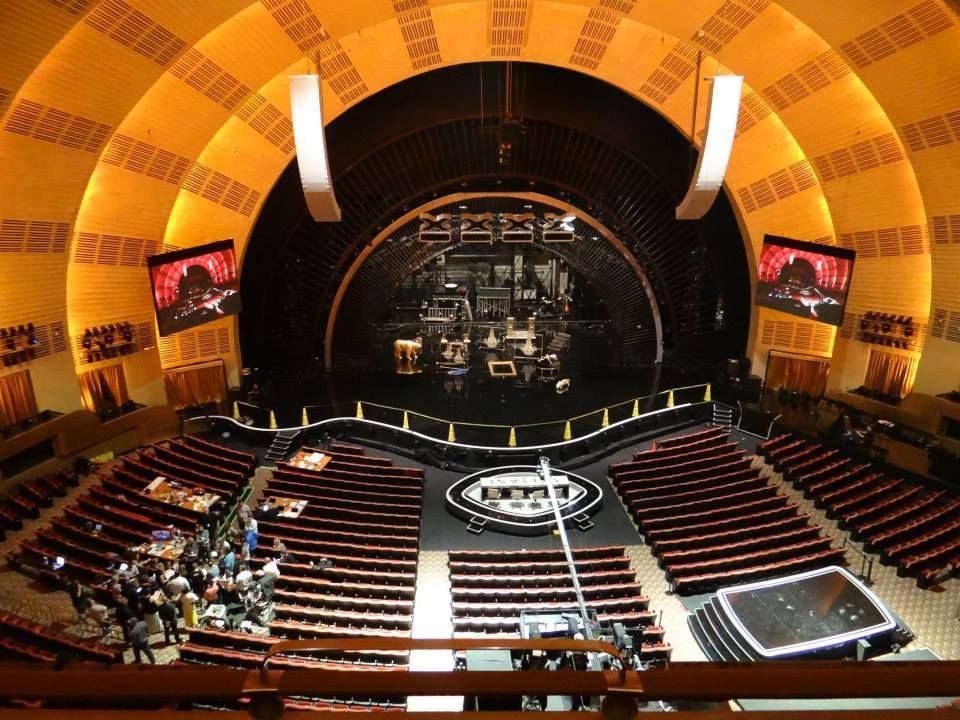
- On Avenue of the Americas, you can’t miss the gleaming facade of Radio City Music Hall, one of New York’s most iconic performance venues.
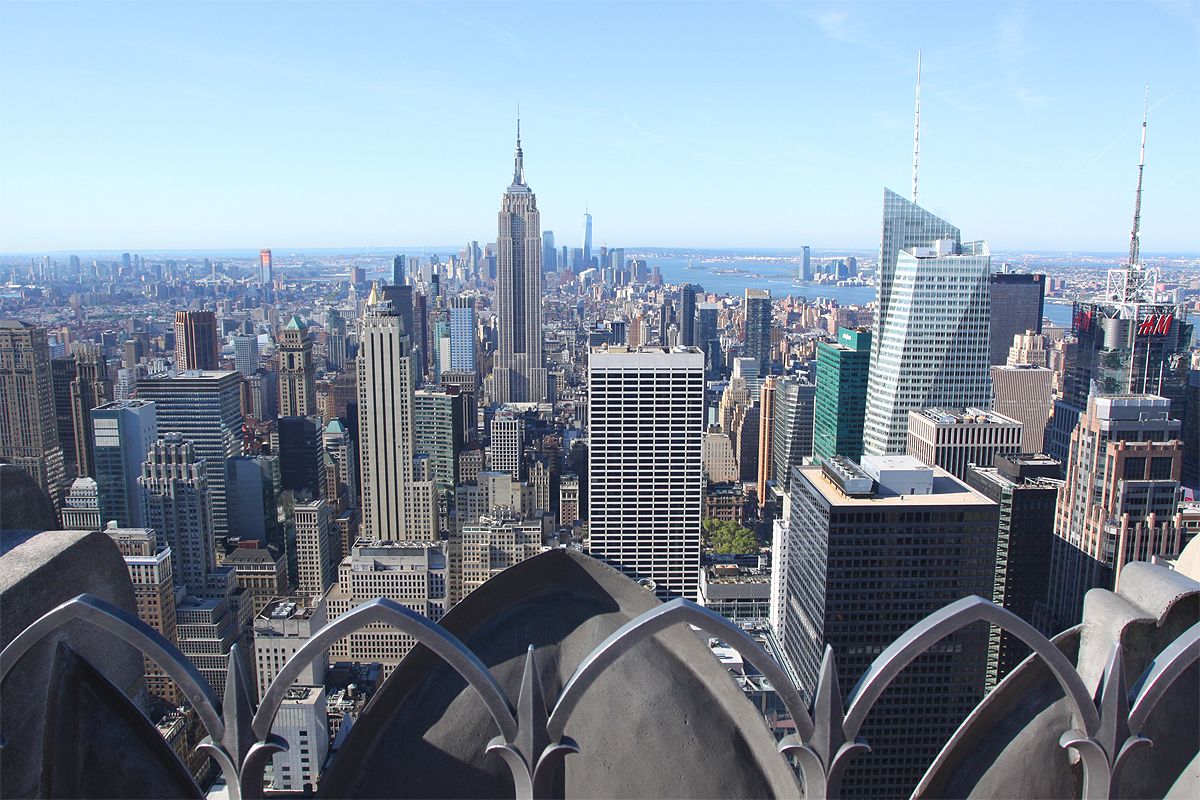
- At the center of Rockefeller Center, the Comcast Building rises 259 m (850 ft) high. Head to the top floor to visit the “Top of the Rock” observation deck, which reopened in November 2005 and offers stunning panoramic views of New York. You’ll see Central Park, the Midtown neighborhood, and the Empire State Building. It’s definitely worth the visit. You can purchase tickets for the Top of the Rock observation deck on our CNEWYORK site.
- In winter, from mid-October through late March, an ice rink operates at the heart of the complex. It’s extremely popular, so book your tickets well in advance. Visit the Rockefeller Center ice rink page for details.

Rockefeller Center in Photos



The History of Rockefeller Center
Built between 1932 and 1940 in the heart of Midtown, Rockefeller Center remains the largest self-contained complex in the United States. Here’s the story of the “Heart of New York.”
Philippe Latger
- Batman fans will note that the Empire State Building keeps its imposing mooring mast for dirigibles, and the Chrysler Building retains its stainless steel gargoyles. But it’s at Rockefeller Center where you’ll find the lines and atmosphere of Gotham City, closest to the aesthetic of the 1930s—both magnificent and austere.
- Coordinated by Raymond Hood, the monumental Rockefeller Center was the work of seven architects. Every prominent artist of the era left their mark. Among them were Lee Lawrie, Isamu Noguchi, and the renowned Diego Rivera, whose work in the lobby of the main skyscraper, now the GE Building, never made it past the official opening. It was replaced at the last moment by a mural from a Barcelona-born artist already working on the site, Jose Maria Sert.
- When the site was designated a historic landmark in 1985, it was called the “Heart of New York.” With its 19 buildings clustered in Midtown between Fifth and Sixth Avenues, it remains the largest self-contained complex in the United States. Sixty thousand people work here daily, and 175,000 visitors pass through, many heading to the Top of the Rock terrace, one of the finest views in New York. A city within a city. Yet success was far from guaranteed at the start.
- Billionaire John D. Rockefeller leased land from Columbia University to build this ambitious complex, intended to rival Wall Street. It was even meant to house the new Metropolitan Opera House. But the economy collapsed in 1929 with the stock market crash, and the new opera house had to wait until 1966 to open at Lincoln Center. Rockefeller didn’t abandon the overall vision. It remained a business center, and without an opera house, it became a palace of popular entertainment: Radio City Music Hall, the legendary venue where the Rockettes perform, along with Christmas shows and major awards ceremonies like the Tony Awards honoring Broadway’s best musicals.
- Despite the crisis, Rockefeller saw the positive effects—materials and labor were cheap—and launched construction in 1931, with philanthropic considerations in mind: at the height of the Depression, building the first 14 skyscrapers provided work for 225,000 people through 1940.
- Opening onto Fifth Avenue, a narrow garden between the French Building and the British Building could only be called Channel Gardens. At the end of this vista stands the GE Building, completed in 1939 with 60 stories—the tallest in the complex—overlooking the Lower Plaza and Paul Manship’s Prometheus, where you’ll now find the ice rink and the Rockefeller Center Christmas tree, the city’s largest. It’s easy to imagine the photographers’ flashbulbs capturing the mayor’s speech while waiting for Batman, created by Bob Kane and Bill Finger that same year.
- Facing Saint Patrick’s Cathedral, Lawrie’s muscular bronze Atlas holds an armillary sphere in front of the International Building, echoing News, another Art Deco masterpiece—a steel wall sculpture on the Associated Press Building entrance by Noguchi.
- You must pass under Wisdom, the mural at the main entrance of the General Electric Building, to discover the famous lobby decorated by Jose Maria Sert, with a painting that replaced Diego Rivera’s subversive work, which had the misfortune of including a portrait of Lenin. Incompatible with an American vision of progress.