
History of New York
Discover the major dates in New York's history. A long and fascinating journey from the first Algonquin Indians to the founding of New York in 1664.
Origins
- Before Europeans settled on the East Coast of the United States, the lands of New York were inhabited by Native American tribes, including the Algonquins. They lived peacefully, sustaining themselves through fishing and hunting.
- The New York of the 15th century bore no resemblance to the skyline we know today: no avenues, no taxis, and certainly no glass towers. Instead, it was heavily forested and hilly. In fact, the name Manhattan means “Island of Hills” in the Native American language.
1524
- The first European to set foot in New York was Giovanni da Verrazano, an Italian navigator sailing for the King of France. The Verrazano-Narrows Bridge, which spans the entrance to New York Harbor, bears his name. He made only a brief stop in New York before continuing south.
1609
- Nearly a century later, Henry Hudson arrived at Manhattan. The navigator was sailing up the river that now bears his name, hoping to find a passage between the North Atlantic and the Pacific Ocean. Like Verrazano, Hudson moved on. Early New York clearly did not attract settlers.
1625
- The first European colony was established in New York by the Dutch, who renamed it New Amsterdam in honor of the Dutch capital. The location was strategically important, allowing the Dutch to control trade routes.
- A year later, Peter Minuit decided to solidify the colony’s presence. The Dutch official purchased all the Algonquin lands for $24. Arguably the greatest real estate deal in history, considering the astronomical price per square meter in Manhattan today.
- The British, however, had no intention of leaving the Dutch alone. They sought to expand their empire and counter French settlements in Canada. Under the leadership of Peter Stuyvesant, the Dutch built a defensive wall around New Amsterdam at the southern tip of Manhattan, in what is now the Financial District. This wall gave its name to Wall Street. But the defense proved no match for the British fleet.
1664
- British warships quickly overwhelmed the Dutch colony. Within days, New Amsterdam fell to English control. The new rulers’ first act was to rename it New York, in honor of the Duke of York.
- The city grew rapidly, and by 1700 it had 5,000 inhabitants. But New York remained the object of imperial ambitions.
1763
- The French attempted to seize New York from the British but failed. The territory remained in British hands.
1775
- American independence fighters organized to resist British rule. The Revolutionary War, supported by France, ended with British defeat.
July 4, 1776
- The Declaration of Independence was signed at the location where City Hall, New York’s town hall, now stands.
1789
- George Washington, the first President of the United States, took the oath of office at Federal Hall, overlooking Wall Street. New York had nearly 30,000 inhabitants at the time. The city continued to grow. By 1807, it had become the largest city in the United States with 123,000 residents.
1827
- Slavery was abolished in New York State.
1835
- A massive fire destroyed much of New York’s commercial district. But the city rebuilt quickly. European immigration continued to surge. By 1850, the population had reached 500,000. It grew to 2 million by 1880 and 3.5 million by 1900. New York was then the world’s second-largest city, after London.
- The early 1900s saw massive immigration from Europe. More than 700,000 people arrived each year at Ellis Island, the gateway to the United States and the American dream. The Statue of Liberty embodied that dream.
1920
- Prohibition reached New York. This law, intended to combat alcoholism, instead led to the rise of organized crime as gangs fought for control of the illegal alcohol trade.
- The Roaring Twenties were also a time of exuberance and celebration, a way to forget the First World War that had just ended. Jazz was born in Harlem, and Broadway hosted show after show. Broadway musicals were in their heyday.
1929
- A devastating stock market crash swept the world. Black Thursday wiped out more than a million investors who lost their savings in hours. America plunged into the Great Depression.
1930
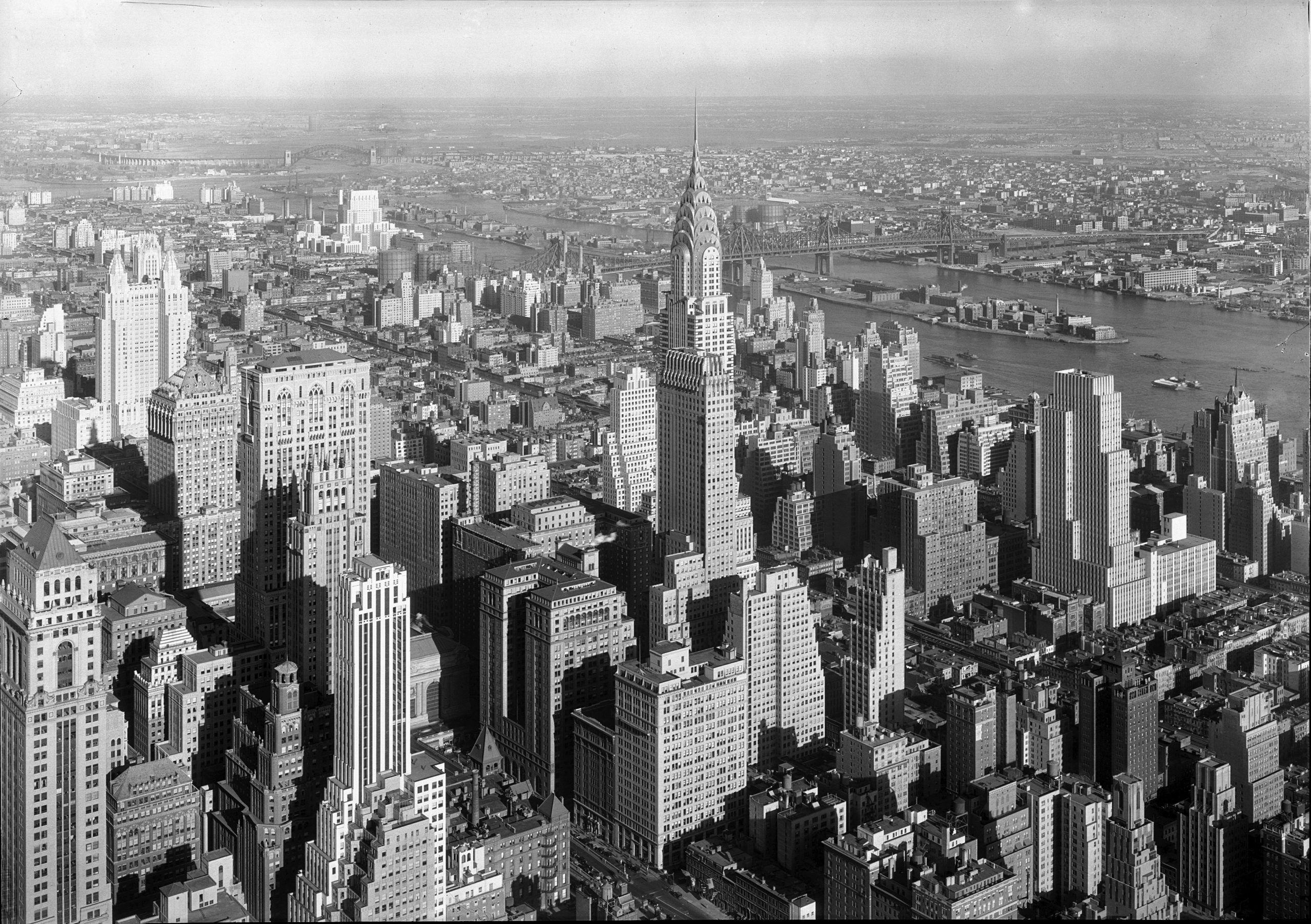
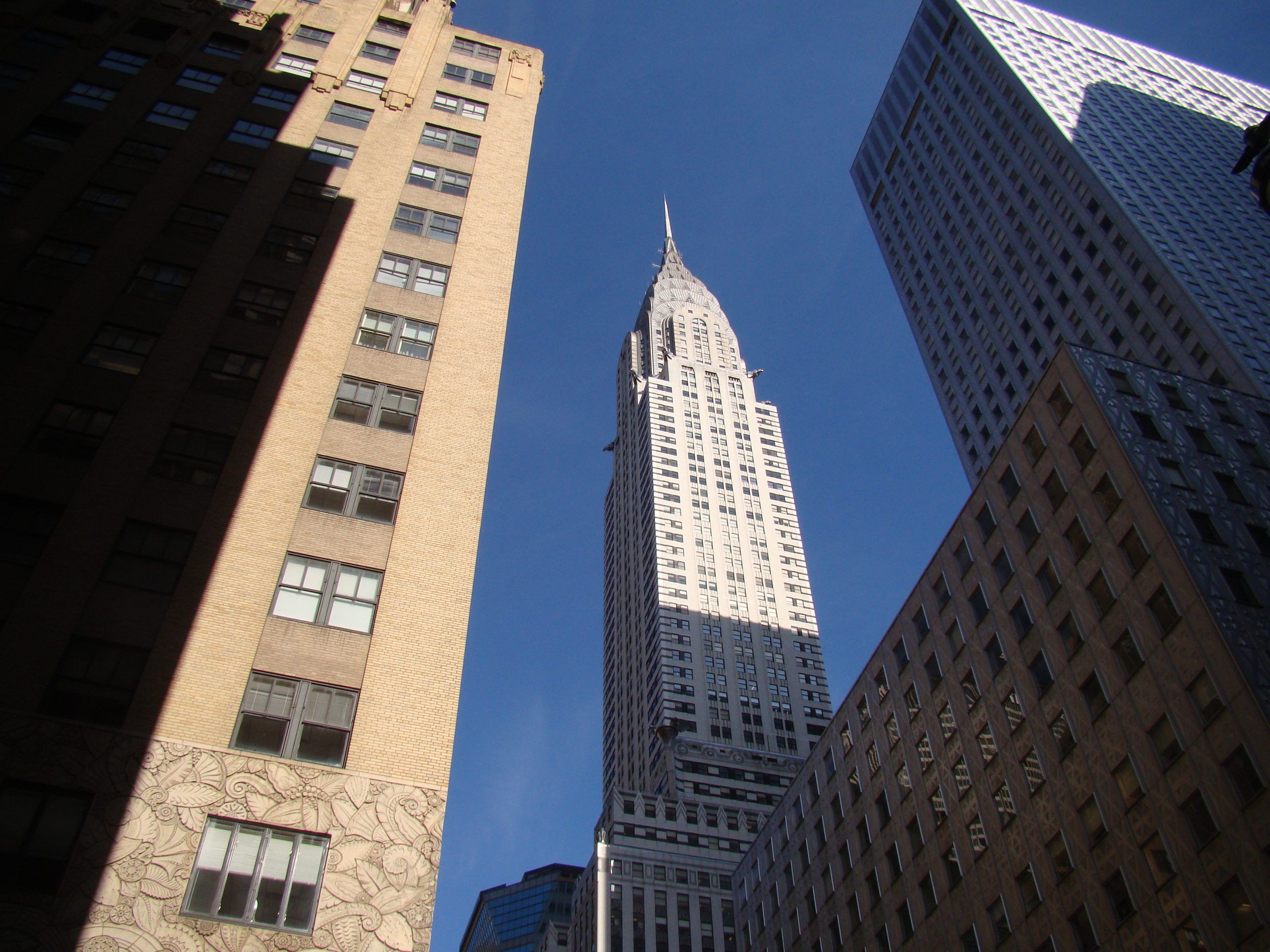
- Despite the economic recession, the early 1930s saw the inauguration of some of New York’s most iconic skyscrapers.
- The Chrysler Building opened in 1930, becoming the world’s tallest building. Not for long. The following year, in 1931, the Empire State Building was inaugurated with great fanfare. The Chrysler Building’s 319 m (1,046 ft) could not compete with the Empire State Building’s 443 m (1,454 ft).
1939
- As Europe entered the war, America had not yet taken sides. That would change in December 1941 with the Japanese attack on Pearl Harbor.
- At Flushing Meadows in Queens, the World’s Fair marked the end of the crisis and the beginning of prosperous years for the American economy.
1952
- The United Nations established its headquarters in New York. The city became home to both the UN General Assembly and the Security Council.
1973
- Skyscrapers continued to rise in Manhattan, particularly downtown. A new complex emerged at the southern tip: the World Financial Center with its twin towers.
2001
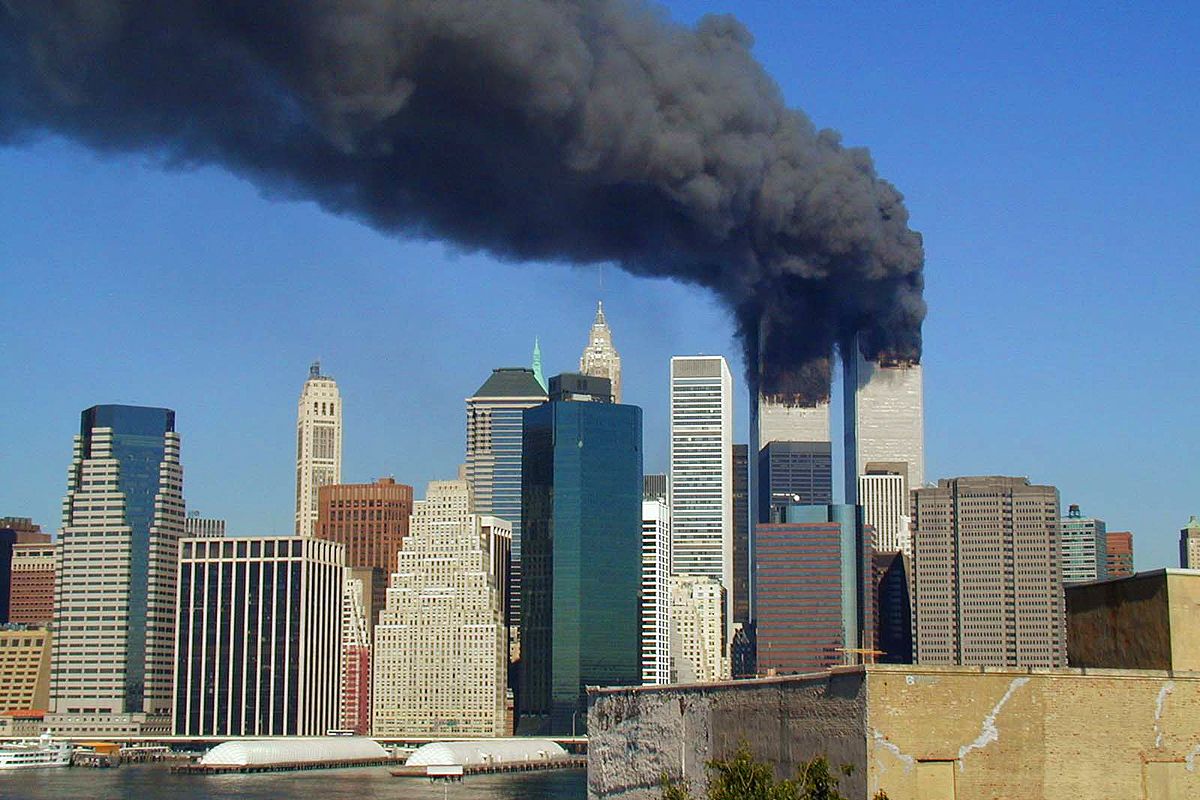
- September 11, 2001. This date is forever etched in the history of New York and the world. Two hijacked planes crashed into the towers of the World Trade Center.
- Hours later, both towers collapsed. At the same time, another plane hit the Pentagon in Washington, and a fourth crashed in a field in Pennsylvania.
2011
- President Barack Obama and his predecessor George W. Bush attended ceremonies marking the 10th anniversary of the September 11 attacks. A memorial and the 9/11 Memorial & Museum were inaugurated, while the future World Trade Center complex began to take shape in the skyline.
2012
- Hurricane Sandy swept through New York. Neighborhoods near the waterfront flooded, causing power outages and disrupting transportation. Hurricane Sandy was one of the worst natural disasters in the city’s history, and New Yorkers who lived through it still talk about it.
2014
- The new One World Trade Center opened, replacing the twin towers. An observation deck opened at the top of the new tower the following year: One World Observatory. It is now the highest observation deck in New York.
2020
- The world faced the devastating COVID-19 pandemic. New York was hit hard. Hospitals became overwhelmed and authorities imposed strict lockdowns. President Joe Biden ordered the closure of the nation’s borders.
2022
- The COVID-19 pandemic was finally brought under control. Borders reopened. Tourism returned.