
Twin Towers: the former World Trade Center towers
The Twin Towers of the World Trade Center were Manhattan's tallest buildings for 30 years. Discover the story behind this monumental project.
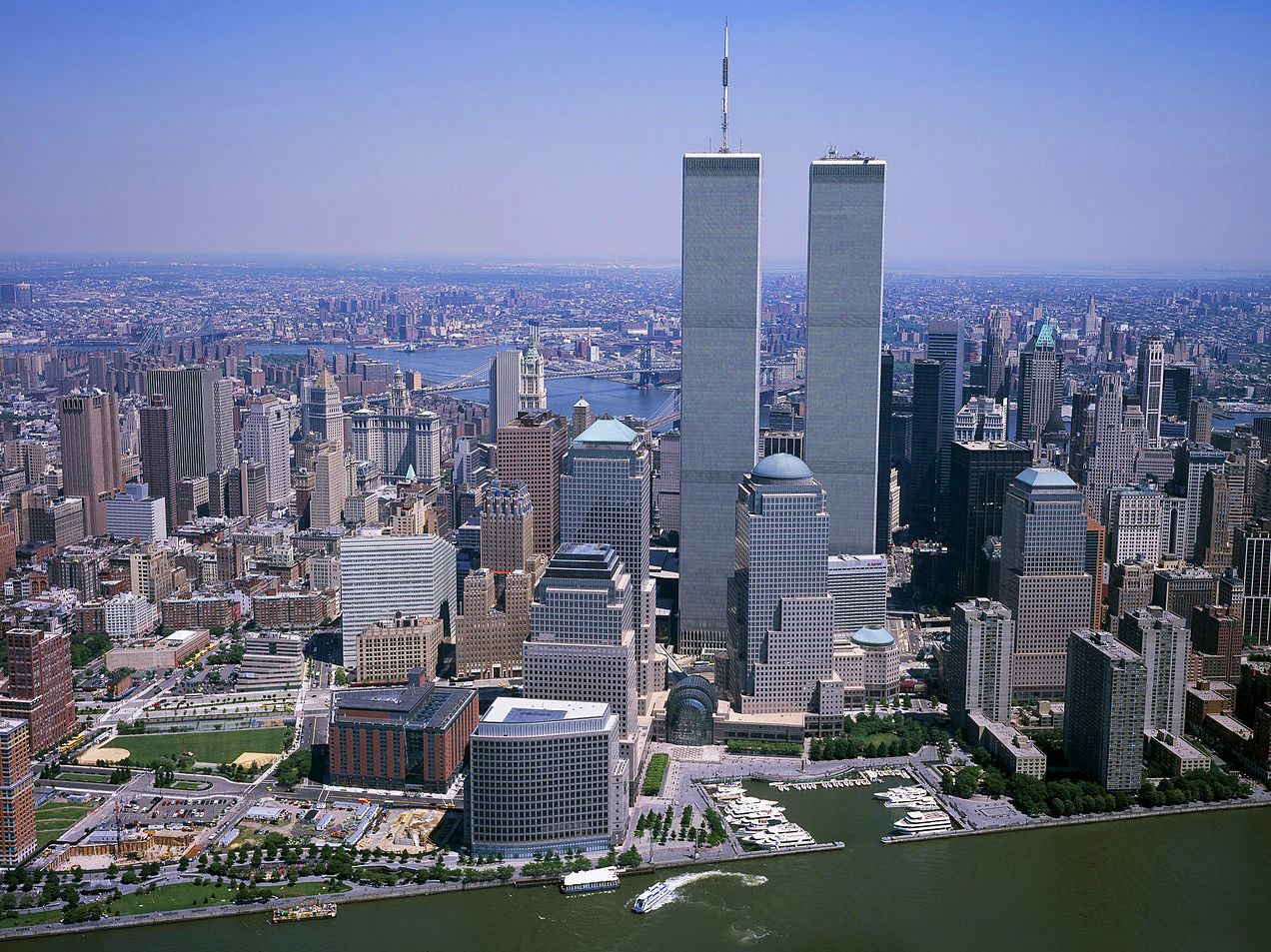
The Twin Towers: Heart of the Original World Trade Center
- Chicago’s Willis Tower (formerly Sears Tower) surpassed them at 443 meters (1,454 ft) almost immediately, so the Twin Towers of the World Trade Center never held the title of world’s tallest for long. Yet for 30 years, standing sentinel at the tip of Manhattan, these twin giants seemed to embody the Pillars of Hercules—gateways to the New World. They were the “Golden door” welcoming immigrants into New York Harbor, carrying as much symbolic weight as the Statue of Liberty.
- Their strength became their undoing. While they captured the collective imagination and stirred excitement to almost irrational heights, with a fate worthy of biblical catastrophe, they were first and foremost the product of brilliant structural innovation. This innovation allowed the towers to reach extraordinary heights while remaining remarkably light. Yet this same structural innovation proved to be their Achilles’ heel.
The Architect Behind New York’s Twin Towers
- Minoru Yamasaki, a Japanese-American architect, studied at the universities of Washington and New York before joining the firm of Shreve, Lamb and Harmon—the designers of the Empire State Building—unaware he would soon rival his mentors. The Seattle native, devoted admirer of Mies van der Rohe and Le Corbusier, built his reputation on critically acclaimed works including Saint Louis Airport.
- He was chosen to revitalize lower Manhattan. By the mid-1960s, the New York-New Jersey region was losing ground as a center of commerce and maritime traffic to Houston and New Orleans. New York urgently needed a spectacular project to reclaim its position. Construction began in 1966 and was completed in 1971.
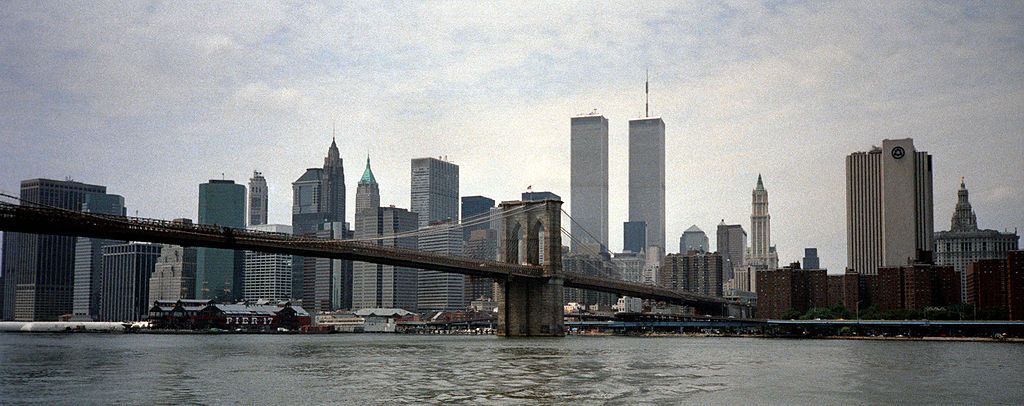
The Twin Towers: Two Colossi with Feet of Clay
- Each tower rose 110 stories and reached 413 and 417 meters (1,355 and 1,368 ft). The facades required 20,000 m² (215,000 sq ft) of glass with over 43,000 relatively narrow windows (56 cm / 22 inches wide), set within a dense framework of load-bearing columns. While each tower’s core—housing communications systems and elevators—supported 60% of the static load, the remaining weight rested entirely on the facades. Simple, efficient, economical, and quick to construct, the design was remarkably light for its volume, despite requiring 200,000 tons of steel.
- The Twin Towers were essentially hollow cages, capable of resisting various forces by distributing stress across the entire outer envelope rather than transferring it to the center. The architecture was engineered to withstand weather, earthquakes, and accidental impacts. Designers had in mind the bomber that crashed into the Empire State Building in 1945 and the plane that struck the Art Deco tower at 40 Wall Street the following year. However, on September 11, 2001, the towers could not withstand the intense heat from the combustion of approximately 75,700 liters (20,000 gallons) of jet fuel released into each building.
Between Confidence and Conquest
- Gateways to America and beacons of New York, the towers inspired both the best and worst reactions. Their perceived arrogance, their ugliness, their emptiness—all sparked endless criticism and controversy, beginning with the mass displacement of residents from the aging Radio Row neighborhood that was demolished to make way for the excavation required by the project.
- Their architect defended his vision: “The World Trade Center should become a living representation of man’s faith in humanity, his need for individual dignity, his confidence in cooperation, and through this, his ability to find greatness.” Minoru Yamasaki died in 1986—15 years before his creation.

The View from the South Tower Observatory
- Discover the view of New York from the observatory that stood at the top of Tower 2, the South Tower, in this article about the view from the Twin Towers in New York.
- You can also browse the World Trade Center brochure—a document that takes on profound meaning when read today.