
10 things to know about New York squirrels
In New York's parks, you'll quickly spot squirrels everywhere! Here's what you need to know before your encounter with these charming city dwellers…

While you’d struggle to spot a squirrel’s tail in Paris, Lyon, or Brussels, you’ll have no trouble encountering these friendly creatures in New York’s parks. Researchers estimate the city’s squirrel population in the millions! Here are 10 facts to help you sound like a local:
- 1/ North American squirrels aren’t red like their European cousins—they’re gray. The species’ scientific name is “Sciurus carolinensis,” but you can simply call them “gray squirrels” or “Carolina gray squirrels.” The word “Sciurus” comes from Latin, derived from a Greek word meaning both “shadow” and “tail.”
- 2/ You don’t need luck to see squirrels in New York—they’re everywhere! Try Madison Square Park, Washington Square Park, and of course Central Park. That said, squirrels behave like people: they’re more active when the weather is warm and sunny.
- 3/ Gray squirrels were already abundant in New York when the first colonists arrived, and they hunted them for meat. Times have changed! In 2010, an Army veteran was sentenced to 30 days in prison for shooting a squirrel in his yard on Long Island.
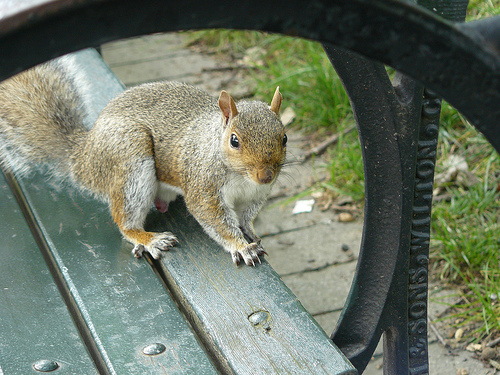
- 4/ Gray squirrels help reforest green spaces. Some of the nuts and seeds they hide and forget eventually sprout, creating new trees.
- 5/ Introducing gray squirrels to other countries hasn’t always gone well. In the United Kingdom, gray squirrels are considered pests, like rats. Since their introduction in 1902, researchers have found that gray squirrels damage the bark of native trees and drive away Britain’s red squirrels.
- 6/ In the wild, squirrels can live 7 to 8 years if they escape foxes and other predators. In captivity, a squirrel can live up to 20 years. But that’s no reason to sneak a New York squirrel into your luggage!
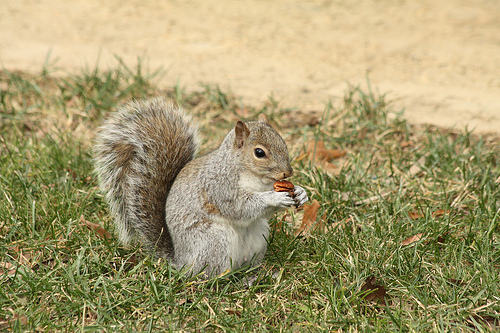
- 7/ A squirrel’s tail is more than just a fluffy plume. It serves several functions: it helps the squirrel balance during jumps and acts as a blanket at night. Even more remarkable: a squirrel can shed its tail to escape a predator’s grip.
- 8/ In 2003, the first resident of the new Bloomberg Tower at the corner of Lexington Avenue and 58th Street was… a squirrel! Construction workers quickly adopted the intruder, but no one knows if the animal still lives in the tower.
- 9/ When the squirrel population began surging in Central Park in the late 19th century, officials debated whether to cull it. Ultimately, conservators and naturalists decided to let nature take its course. Their thinking was that squirrels could help people connect with nature and care better for animals. In New York, this coexistence still works!
- 10/ Since the 1980s, parks have posted signs asking visitors not to feed squirrels. There are several reasons: human food doesn’t match squirrels’ diet, feeding makes them less wary of people, and it causes them to lose their natural hunting instincts. Naturalists ask you to observe them, photograph them, but don’t feed them.
Your squirrel photos from New York
Here are squirrel photos taken by fans of our Facebook page. If you’ve also photographed a squirrel in New York, feel free to share it on our Destination New York Facebook group!


