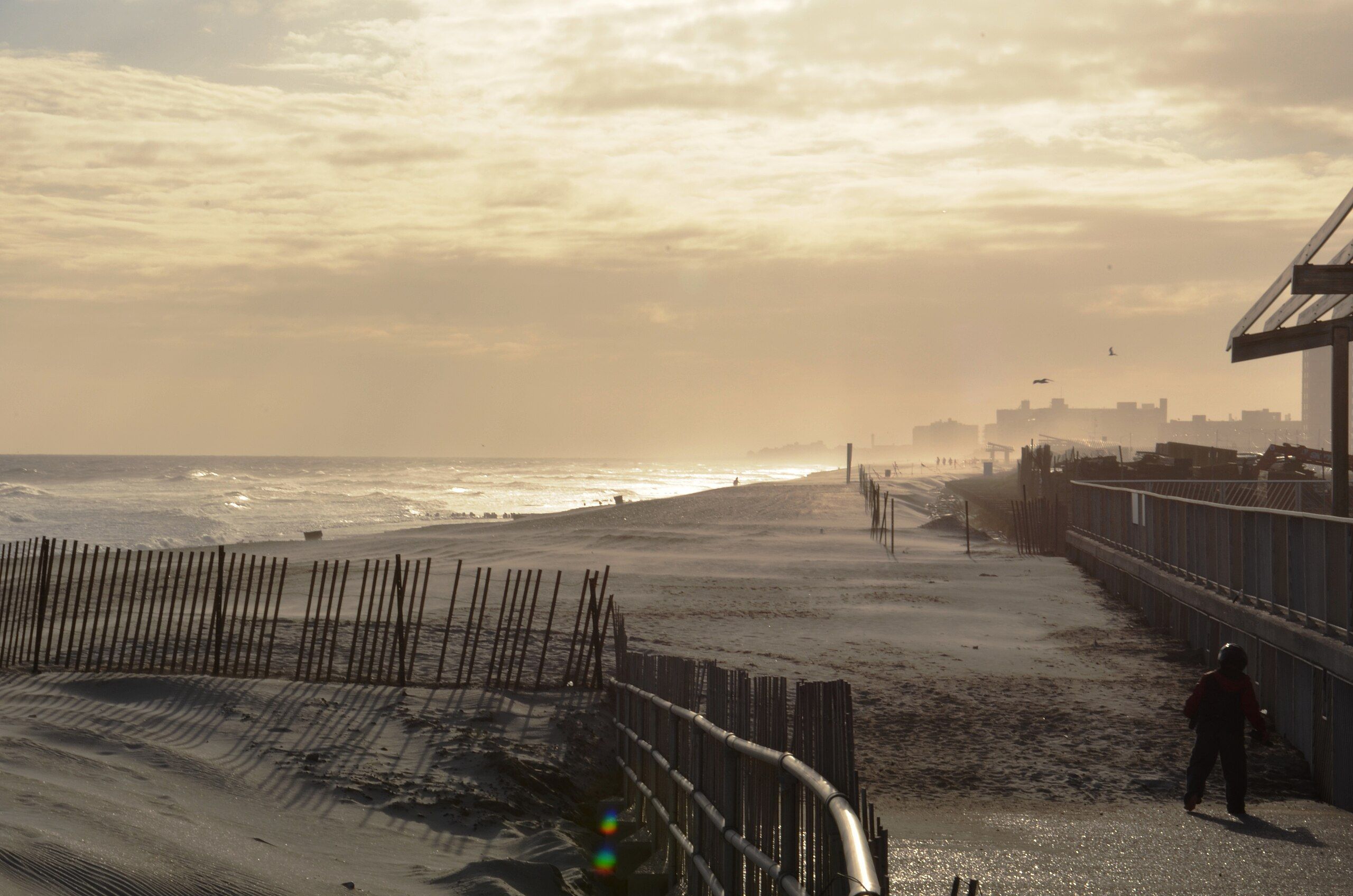
Rockaway Beach: New York’s Surfer Beach
Rockaway Beach is both a New York neighborhood and a sprawling Atlantic coastline. Discover the heart of New York's surf scene!

What to Know About Rockaway Beach
- Rockaway Beach is a neighborhood in New York located on the Rockaway Peninsula, between the Atlantic Ocean and Jamaica Bay. The neighborhood is part of Queens and sits near New York-JFK Airport.
- The neighborhood takes its name from Rockaway Beach, the longest urban beach in the United States. It stretches for just over 11 km (6.8 mi), from 149th Street in Neponsit to 9th Street in Far Rockaway to the east. According to the National Park Service, several million visitors come to Rockaway’s beaches each season.
- Rockaway Beach is a relatively young neighborhood. Its development began with Michael P. Holland, a pioneer who purchased land on the peninsula in 1857. A few years later, German immigrant Louis Hammel also bought property there. On June 11, 1897, the two men decided to merge their holdings and founded Rockaway Beach.
- The neighborhood became part of New York City in 1898. The opening of two bridges in 1937 and 1939 made the area far more accessible, spurring development and year-round settlement.
- In the 1960s, the beach and waves began attracting surfers in large numbers, inspired by California’s surf culture. At the time, local residents mocked these hippies on their boards. Surfing took root and grew significantly in the 1990s with the opening of surf schools and specialty shops. Rockaway Beach is now the only place in New York where surfing is officially permitted. Designated surf zones are located between 67th and 69th Streets and between 87th and 92nd Streets.
What to See in Rockaway Beach
- This small neighborhood of 13,000 residents feels completely different from the Financial District or Midtown. You’ll discover a very different side of New York.
- The main draw of Rockaway Beach is clearly the beach and ocean. Walk the boardwalk that runs nearly 9 km (5.6 mi) along the water. You can also spread out a towel and picnic on the sand. Barbecue grills, sports courts, playgrounds, showers and restrooms are all available.
- Don’t hesitate to take a swim. Swimming at Rockaway Beach is permitted only during the season, from May through early September, from 10 am to 6 pm. Lifeguards monitor the beaches and ensure safety. Swimming is strictly prohibited when lifeguards are not on duty, outside the season, or outside these hours.
- Walking west along the beach, you’ll enter Jacob Riis Park, a large park that opened in 1912. You’ll see the striking Art Deco building that once housed public baths. The structure, topped with two octagonal brick towers, dates to 1932. Jacob Riis Park is open daily from 6 am to 10 pm.
- Another notable site in Jacob Riis Park is Fort Tilden. This fort was built in 1917 when the United States entered World War I. It was reinforced during World War II with the addition of a bunker and artillery batteries. The site is now abandoned and listed as a historic monument.
- Before exploring the neighborhood, listen to the Ramones’ song “Rockaway Beach.” This 1977 hit has echoes of the Beach Boys. When New York imagines itself as California!

How to Get to Rockaway Beach
- The fastest way from Manhattan to Rockaway Beach is by taxi. The trip takes about 30 minutes from Manhattan. Expect to pay around $120 including tip. Be aware that depending on the time of day, you may face heavy traffic on the highways, bridges, and around New York-JFK Airport. In that case, your fare could be higher.
- The most economical way to reach Rockaway Beach from Manhattan is the New York subway. Take the A line to its terminus at Rockaway Park-Beach 116 St. Depending on the day and time, the line may stop at Broad Channel at the entrance to the peninsula. You can then continue on the S line to Rockaway Park-Beach 116 St. The trip from Manhattan to Rockaway takes about 1 hour 30 minutes.
- Another option if you want to take your time: the ferry. NYC Ferry operates a route from Wall Street/Pier 11 to Rockaway Beach. The journey takes about an hour but offers a genuine mini-cruise. You’ll pass under the Verrazzano Narrows Bridge and along Coney Island before sailing through Jamaica Bay. A voyage within a voyage! Ticket price: $4.50 per trip.
- A good option is to take the ferry one way and the subway back. This lets you enjoy the sea air on the way there and head directly to your subway station on the return.
Frequently Asked Questions
When is the best time to visit Rockaway Beach?
Rockaway Beach is a residential neighborhood that’s active year-round. However, it’s much livelier during the season from Memorial Day to Labor Day—the last Monday in May through the first Monday in September. We recommend visiting on weekends to enjoy the beach atmosphere and watch surfers in action.
Can you surf at Rockaway Beach?
Yes, you can surf at Rockaway Beach in two designated zones: between 67th and 69th Streets and between 87th and 92nd Streets. The beaches are open to surfers year-round from sunrise to sunset. Note that the surf beaches are not monitored and no lifeguards are on duty. You surf at your own risk, so be careful. You can rent equipment and get advice from local surf schools and shops. Two places to know: Rockaway Beach Surf Shop (1-77 Beach 116th Street) and Surfs Up NY (108-10 Rockaway Beach Drive).
Photos of Rockaway Beach